🌌 The Journey of the Soul (Reincarnation and Resonance)
A Philosophical Page of Similarity Theory
By Simon Raphael
⚖️ Testimonies from the Edge of Life
From what we know through near-death experiences (NDEs), thousands of people who clinically died and returned describe realities that are astonishingly consistent. Their reports reveal a universe far more structured and conscious than materialism alone allows.
Across decades of research, doctors such as Dr Raymond Moody (Life After Life, 1975), Dr Bruce Greyson (University of Virginia), and Dr Pim van Lommel (The Lancet, 2001) have documented recurring experiences:
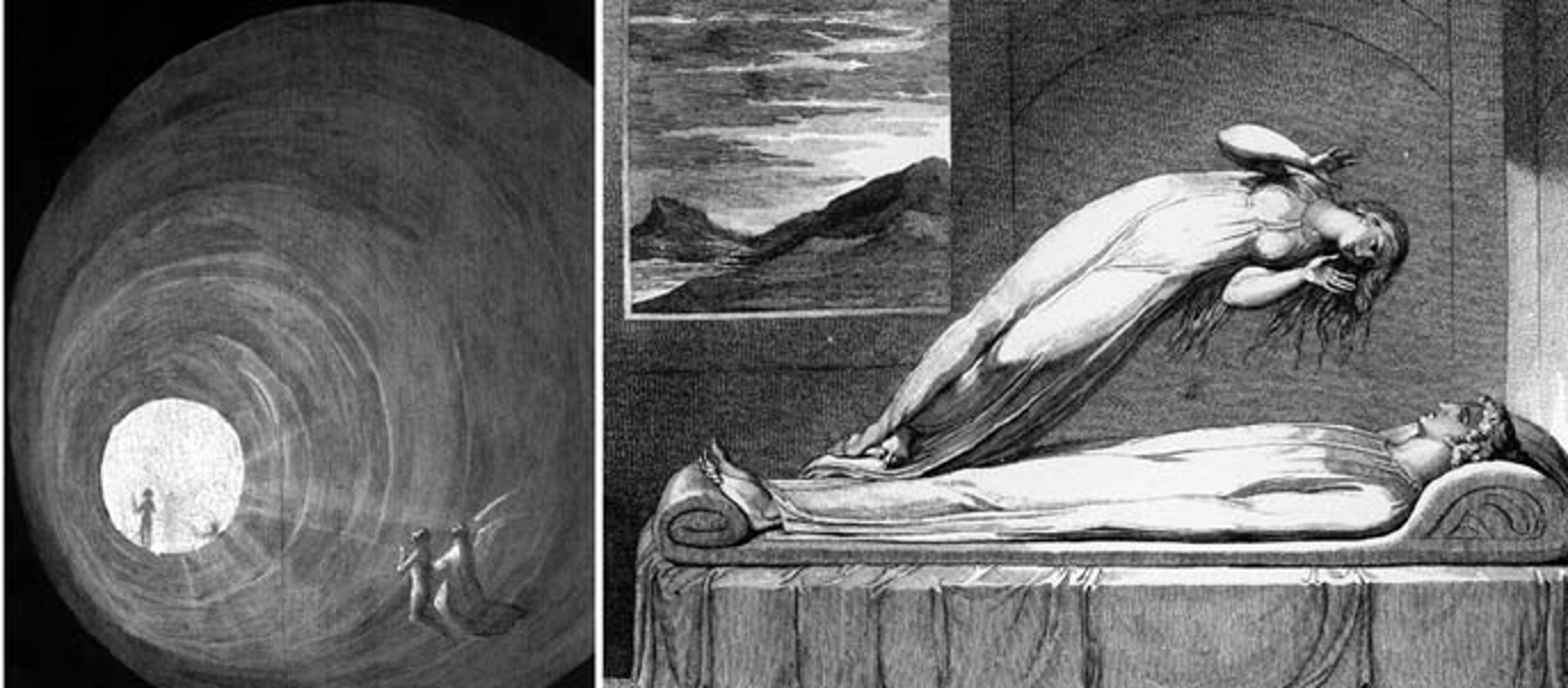
Leaving the body and observing medical staff from above.
Travelling through a tunnel toward an all-embracing light.
Telepathic communication with loving presences or departed relatives.
A panoramic, empathetic life review — seeing one’s own actions through the feelings of others.
Many speak of a realm of unimaginable love — described as “home,” “light,” or “the source.”
Others, however, recall hellish dimensions, filled with terror, isolation, and unbearable emotional intensity.
Both extremes reveal that what we carry within us — love or fear — becomes the environment we awaken into.
🔄 Evidence of Reincarnation
Scientific inquiry into reincarnation offers some of the strongest empirical support for the survival of consciousness.
Dr Ian Stevenson (1918–2007), professor of psychiatry at the University of Virginia, investigated over 2,500 children who remembered previous lives. He meticulously verified birth records, family testimonies, and physical marks. His book Twenty Cases Suggestive of Reincarnation (1974) remains a landmark study.
Dr Jim B. Tucker, Stevenson’s successor, continues this work today and presents modern Western cases in Return to Life (2013).
🪷 Case 1: Shanti Devi (India, 1930s)
At age four, Shanti began describing her previous husband, home, and city — details later matched to a merchant’s family in Mathura, a town she had never visited.
A commission including Mahatma Gandhi confirmed her statements. She recognised her former relatives, described private moments from her previous life, and even remembered hidden possessions later found where she claimed they were buried.
✈️ Case 2: James Leininger (USA, 1990s)
A two-year-old boy began having nightmares of being trapped in a burning plane. He named the aircraft (Corsair), the ship (Natoma Bay), and a friend “Jack Larsen.”
Research confirmed these details matched James Huston Jr., a WWII pilot killed over Iwo Jima.
Leininger’s behaviour, terminology, and emotional reactions aligned with Huston’s experiences, verified through military archives and surviving veterans.
Across these studies, several patterns repeat:
Birthmarks and scars that correspond with fatal wounds from the prior life.
Talents, fears, and habits that match those of the deceased individual.
Memories verified by external witnesses or documentation.
Together, these findings suggest that consciousness persists beyond the brain, re-emerging into new forms according to resonance and unfinished purpose.
🌠 Realms of Love and Realms of Agony
From both NDE testimonies and reincarnation research, it becomes clear that the next world is a spectrum of resonance — from unimaginable love to unbearable despair.
The loving realms are described as radiant, peaceful, and utterly unified — where thought creates form and every being communicates through direct knowing.
The darker realms, by contrast, are chaotic reflections of inner distortion — where fear and cruelty echo endlessly in self-made prisons.
Similarity Theory explains this as the law of resonance:
Each soul is drawn toward more of what it already is.
The movement is not always chosen — it can be magnetic.
Just as two water droplets, once near enough, merge naturally through surface tension, so too do similar souls unite with the field that matches them.
This does not mean we live in a deterministic universe. As above, so below — sometimes we choose freely and sometimes forces and circumstances restrict our movement. We can only choose what we are capable of choosing.
Just as one cannot decide to be a doctor after studying engineering without first changing one’s foundation, so too the soul cannot choose a realm for which it is unprepared.
It is not a moral verdict; it is the physics of consciousness shaped by earlier choices and capabilities.
🧲 Attraction, Not Choice
Transition between realms works through energetic gravity rather than divine judgement.
Souls are not commanded to go anywhere; they are drawn by what they have already become.
Choice always exists, but its influence depends on timing.
The decisions made during life form the resonance that governs the next stage.
One cannot live destructively and then, at the moment of death, simply decide to enter a realm of harmony. Earlier choices have already set the path.
Freedom is real, yet once the threshold is reached, the options remaining are those already built by prior intent and conduct.
🧠 Telepathy and the Requirement of Purity
NDE witnesses often describe instantaneous telepathy — thought-to-thought understanding without speech.
Every emotion is transparent. Every intention, known.
If such complete honesty existed on Earth, most relationships would collapse under the weight of hidden envy, pride, or resentment.
That is why only refined souls — those who have learned to think and feel without malice — can remain in the higher fields.
Others are naturally repelled or redirected:
Some reincarnate for further learning.
Others drift in unstructured, dreamlike states.
A few, through intense dissonance, are pulled into darker realms until balance is restored.
🌀 Frames of Time and the Spiral of Return
In Similarity Theory, each incarnation is a frame within the infinite spiral of time.
Every life, every death, is another rotation of consciousness seeking alignment.
Progression is not linear but cyclic — the spiral ascends or descends depending on resonance.
Reincarnation is therefore not a punishment, but a continuation of learning.
It allows the soul to refine itself until it vibrates in harmony with higher dimensional structures — what ancient mystics called “heaven,” and physicists might describe as a field of coherent energy.
🧭 Continuity, Identity, and the Necessity of the Soul
At this point, an important distinction must be made between recycling and continuity.
In the universe, energy, matter, and information are continuously recycled. They disperse, recombine, and reappear in new configurations, sometimes becoming more complex, sometimes returning to simpler forms. Their persistence is structural, not personal.
Consciousness is different.
If awareness were merely recycled — dissolved back into a universal field and later reorganised without individual continuity — then genuine learning would be impossible. A consciousness capable of recognising life, technology, language, and meaning could never arise if each cycle reset awareness to an undifferentiated state.
What allows reincarnation to function as learning rather than repetition is the continuation of the experiencing thread itself.
This thread is what Similarity Theory refers to as the soul: not an eternal personality, not a static essence, but a persistent centre of awareness that moves across frames of existence.
Crucially, continuity does not require full memory retention. Human life already demonstrates this. We forget infancy, abandon former identities, release relationships and roles that once defined us — yet we remain the same conscious subject. Memory fades because memory is a tool, not the carrier of identity.
What persists is not biography, but perspective.
Across incarnations, the soul retains the capacity it has developed — the ability to perceive, empathise, choose, and understand — while shedding memories that are no longer functional. Forgetting is not loss; it is refinement.
Without this individual continuity, consciousness could never progressively organise itself toward higher awareness. Complexity would collapse into endless restarts. Meaning would dissolve into noise. The very existence of moral development, ethical resonance, and increasing self-awareness implies that each soul continues as itself, even as its contents are simplified or renewed.
Reincarnation, therefore, is neither dissolution into sameness nor eternal fixation of identity. It is structured continuity — the soul persisting as the organising force that makes growth possible at all.
🌱 Reincarnation Beyond Form
It is important to clarify that within Similarity Theory, reincarnation does not imply a return to the same biological form, species, or even planetary context.
The continuation of the soul is not tied to being human.
A soul may re-emerge as a different kind of life altogether — biological or non-biological, terrestrial or non-terrestrial — depending on resonance, capacity, and the structures available within the wider universe. The form is secondary; the continuity of consciousness is primary.
Human-to-human reincarnation is therefore only one possible expression, not the default rule. A soul may inhabit forms with radically different sensory systems, lifespans, or modes of awareness — such as animal life, plant life, or forms of intelligence beyond Earth that we do not yet understand.
What persists is not the shape of the vessel, but the ability to experience, integrate, and evolve.
Similarity Theory does not claim certainty about how reincarnation unfolds in every case. It acknowledges the limits of current knowledge. What it asserts is that consciousness continues through suitable structures wherever they arise, guided by resonance rather than familiarity.
Reincarnation, in this sense, is not repetition within a species, but participation in a much larger ecology of consciousness.
⚖️ The Importance of Ethics
Ethics are not commandments from above; they are laws of resonance written into reality itself.
Every thought, emotion, and action adjusts the frequency of your being.
If life on Earth feels heavy, demanding, or exhausting, the solution is not escape but refinement.
To rise, you must match the vibration of higher realms.
To indulge cruelty, deceit, or greed is to tune yourself toward lower fields, where suffering magnifies far beyond earthly scale.
The wise learn that ethics are not only about morality, but also about navigation. They are the compass guiding the soul to its next destination.
🌌 A Just Universe Without a Judge
In the universe described by Similarity Theory, there is no external courtroom — only the gravity of resonance.
Heaven and hell are real but self-created fields of energy.
Reincarnation is education, not punishment.
Every soul remains free to rise again.
The universe is not ruled by fear, but by reflection.
What you feel, what you love, and what you carry within become the reality you awaken to — not wealth or power, but the emotional truth of your being.
📚 References
Moody, R. (1975). Life After Life.
Greyson, B. (2021). After: A Doctor Explores What Near-Death Experiences Reveal About Life and Beyond.
Van Lommel, P. (2001). “Near-Death Experience in Survivors of Cardiac Arrest.” The Lancet.
Stevenson, I. (1974). Twenty Cases Suggestive of Reincarnation.
Tucker, J.B. (2013). Return to Life: Extraordinary Cases of Children Who Remember Past Lives.
Raphael, S. (2025). Similarity Theory: Frames of Time and Dimensional Resonance. =
Similarity Theory
© Similarity Theory is the intellectual property of Simon Raphael.
All rights reserved. Reproduction or distribution without consent is prohibited.