🌀 Similarity Theory of Everything
A Foundational Page of Similarity Theory
By Simon Raphael
🔦 Redefining “Everything”
When modern physics refers to a Theory of Everything (TOE), it typically describes a mathematical framework that unifies all known forces — gravity, electromagnetism, and the nuclear interactions — into a single formal equation (1).
This is an admirable scientific ambition, yet it does not truly address everything. It is, more precisely, an attempt to create a unified mathematical description of physical behaviour.
Mathematics is immensely powerful, but it is not the fabric of reality itself. It is a symbolic language — a tool for describing patterns (2). Mistaking the language for the reality it represents narrows “everything” to what can be expressed in equations.
🌌 Why Similarity Theory Goes Further
Similarity Theory begins from a different foundation:
Consciousness is the first act of creation — the origin point from which all structure emerges.
Time is expressed as eternal frames through which beings move (3).
Dimensions unfold not only as physical spaces, but also as levels of awareness and modes of existence (4).
Ethics, resonance, and attraction — including love — are as foundational as gravity or electromagnetism.
In this sense, Similarity Theory unifies not only the physical, but also the philosophical, metaphysical, and experiential. It provides a framework capable of explaining why things exist, how they persist, and what meaning arises from them.
⚖️ Physics TOE vs Similarity TOE
Foundation
Physics TOE: Mathematics — equations unifying physical forces.
Similarity TOE: Consciousness — the immanent awareness within all things.
Scope
Physics TOE: Matter, energy, and the physical forces.
Similarity TOE: Matter and consciousness, time, dimensions, ethics, resonance, and mystery.
Goal
Physics TOE: One formula to describe the universe.
Similarity TOE: One framework to understand existence itself.
Limitation
Physics TOE: Cannot explain origin, meaning, or subjective experience.
Similarity TOE: Includes physics but extends beyond it — into experience, purpose, and the unknown.
🧭 Completing the Picture
This is not a rejection of physics. Physics remains essential.
But when physicists label a mathematical unification a Theory of Everything, they mistake a subset for the whole.
A genuine Theory of Everything must include:
The equations governing matter
The experiences arising within mind
The unfolding of time and choice
The resonance of love, ethics, and attraction
And the mystery that cannot yet be written
Only then can it speak meaningfully of “everything”.
✨ Conclusion
Similarity Theory fulfils the deeper meaning of a Theory of Everything — not by replacing science, but by completing it.
It situates mathematics within a larger fabric woven from consciousness, dimensions, time, resonance, and meaning.
It unifies not only what the universe is, but why it matters.
📖 References
Barbour, J. (1999). The End of Time.
Mandelbrot, B. (1982). The Fractal Geometry of Nature.
Barbour, J. (1999). The End of Time.
’t Hooft, G. (1993); Susskind, L. (1995). Holographic Cosmology.
Raphael, S. (2025). Similarity Theory.
🔎 Similarity Theory Summary
Similarity Theory is a consciousness-first framework in which reality develops through change, relation, and similarity.
Consciousness is primary. Change generates new Frames of Time, while earlier Frames remain determinate. Continuity may develop through successive Frames and may also branch into more than one genuine continuation.
Dimensions describe differing capacities and modes of conscious experience, while similarity provides a means of recognising relations, patterns, and continuity across existence.
In short, consciousness is the foundation, relation is the structure, change generates development, and similarity reveals the connections between them.
Despite its name, Similarity Theory is therefore not merely a theory about resemblance. Similarity is the investigative principle; consciousness and relational existence are the subject of the framework.
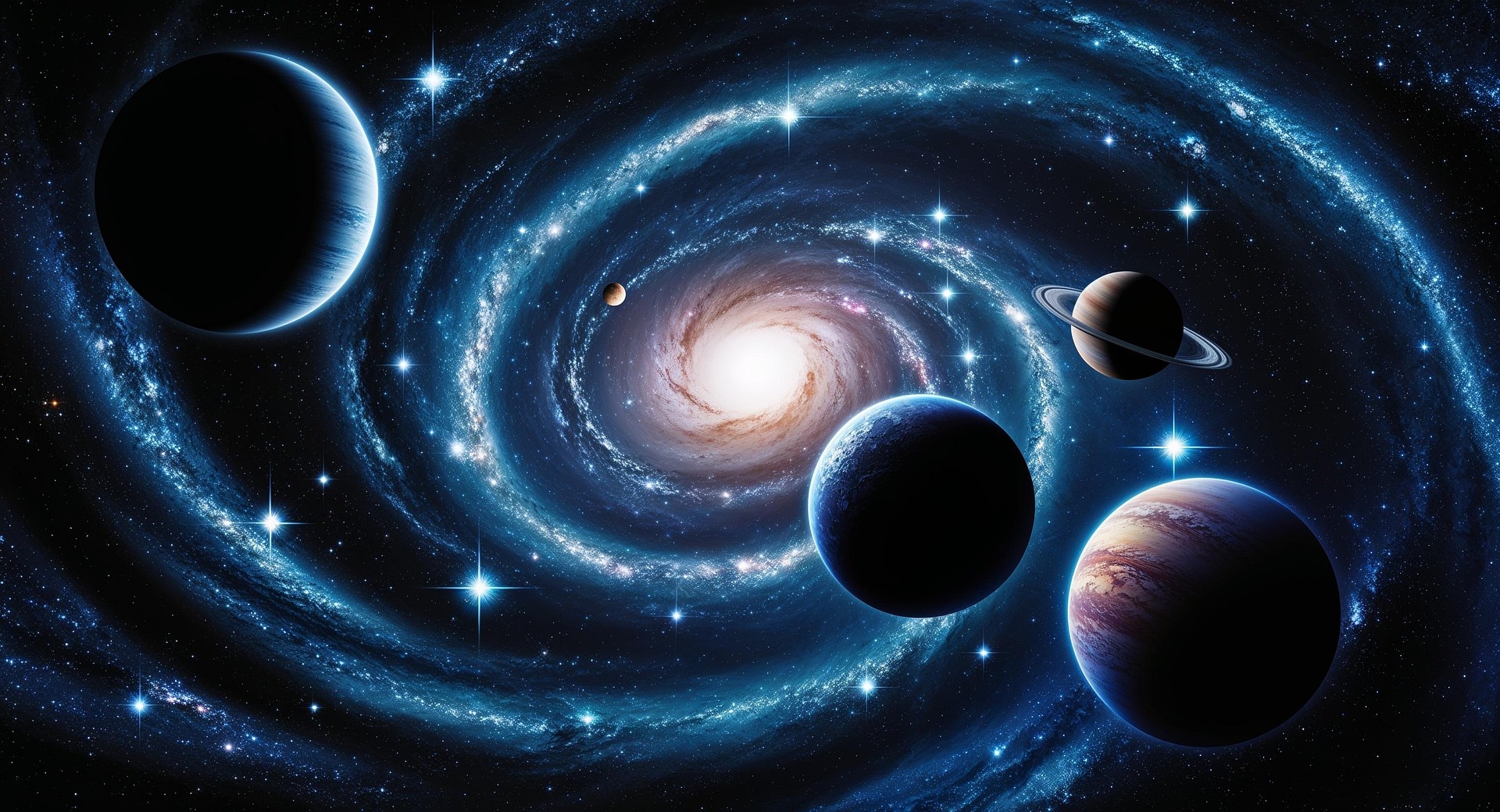
Similarity Theory
© Similarity Theory is the intellectual property of Simon Raphael.
All rights reserved. Reproduction or distribution without consent is prohibited.